
The Credit Union Academy™
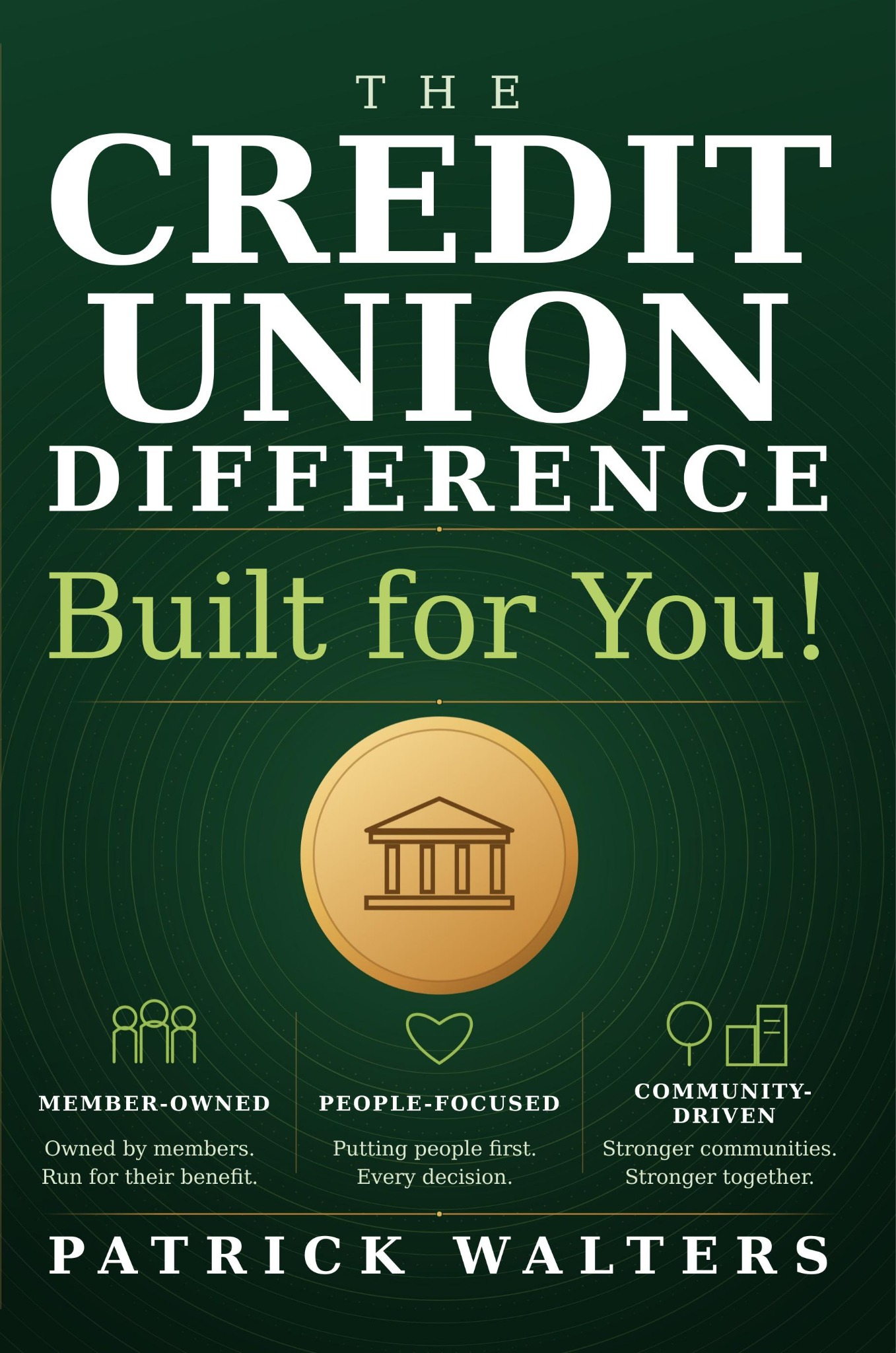
The Credit Union Academy builds on the book The Credit Union Difference: Built for You! – which explains why credit unions exist, what makes them different from banks, and why member ownership still matters.
The Academy extends those ideas into two learning tracks: one for volunteer board members and one for credit union employees. Each track is designed to deepen understanding of why the cooperative credit union movement matters more today than ever—and how directors and employees can help keep it strong through informed governance, service, accountability, and a shared commitment to the cooperative purpose.
“Read it. Share it. And ask one simple question: Why aren’t more things built for you?”
— Stephen Owen, President, First Entertainment Credit Union
Choose your starting point
The book, the Board Academy, and the Employee Academy work together, but each has its own purpose and product page.
Book
The Credit Union Difference™
The Credit Union Difference reveals how a member-owned, people-focused financial model creates real value where it matters most – in your wallet, your community, and your future. Built on the simple idea that financial institutions should serve the people who use them – not outside investors – credit unions offer a fundamentally different approach to banking: one centered on ownership, service, accountability, and community.
Director Education Track
Board Academy
A six-module director education track for volunteer credit union directors. It teaches what the director’s job is, how to perform it, and how to govern without managing.
Buy NowEmployee Education Track
Employee Academy
A six-module employee education track for onboarding and culture building that helps employees understand the cooperative movement and become better-informed advocates for members.
Buy NowComplete Academy
Complete Academy License
The complete twelve-module Board and Employee Academy, tracks the entire cycle from board and employee to members.
Buy Now“Credit unions were created to give ordinary people access to fair financial services. Today, the movement continues when volunteer directors practice disciplined governance and employees understand that their daily work delivers the cooperative promise.”
— Patrick Walters, CPA, Chair Emeritus, First Entertainment Credit Union
Who This Is For
Built for the entire credit union system.
Board Directors
Clarify governance, oversight, risk, CEO accountability, and mission protection.
Employees
Introduce the movement, the history, and why every employee interaction carries the mission.
Members
Why are credit unions better than banks?
Why choose a credit union over a bank?
What's the actual difference between a credit union and a bank?
A commercial bank is a for-profit company accountable to its shareholders. A credit union is a not-for-profit financial cooperative accountable to the members who own it — every checking account, savings account, or loan makes you a part-owner, not just a customer. That single structural difference is what shapes every pricing, product, and service decision downstream.
Do credit unions actually save members money, or is that just marketing?
Independent NCUA data puts it at roughly $38 billion in financial benefits delivered to credit union members in a single year — through better rates, lower fees, and dividends — against a $2.8 billion annual cost of the federal tax exemption that makes it possible. On a specific product like a credit card, a member carrying a $5,000 balance typically pays $250 to $400 less per year at a credit union than at a standard bank rewards card.
How does member ownership actually work — do I get a vote?
Yes. Most credit unions operate on one member, one vote in board elections, regardless of account balance. A member who just opened a modest savings account has the exact same democratic standing as a member with decades of history and significant assets — a structural equality that has no equivalent at a shareholder-owned bank.
Are credit unions only better for basic banking, or do they compete on more sophisticated products too?
Both. Beyond everyday accounts, credit unions regularly beat bank averages on products like student loan refinancing and savings certificates — 2.95% versus a 2.29% national bank average in late 2025, for example. The exception worth naming honestly: a member who always pays their credit card in full every month can sometimes come out ahead with a high-cashback bank card, since the credit union’s rate advantage only matters if you carry a balance.
Do credit unions actually show up for members when it counts, or is 'people helping people' just a slogan?
During the 35-day federal government shutdown in 2018-2019, more than 500 credit unions provided over $46 million in low- or no-interest loans to roughly 60,000 furloughed federal employees, while many commercial banks stayed on the sidelines. It happened again during the 2025-2026 shutdown, when credit unions rolled out zero-interest emergency paycheck advances and rewrote lending guidelines within hours to help members without full documentation.
Are credit unions perfect — do they ever get it wrong?
No, and pretending otherwise would undercut the argument. The CFPB ordered the largest credit union in the country to refund more than $80 million in overdraft fees in 2024, and the DOJ reached its first-ever redlining settlement with a credit union that same year. What both cases show is that keeping the cooperative legal structure isn’t the same as keeping cooperative practice — which is exactly why board governance and member oversight matter, not just the ownership model on paper.