
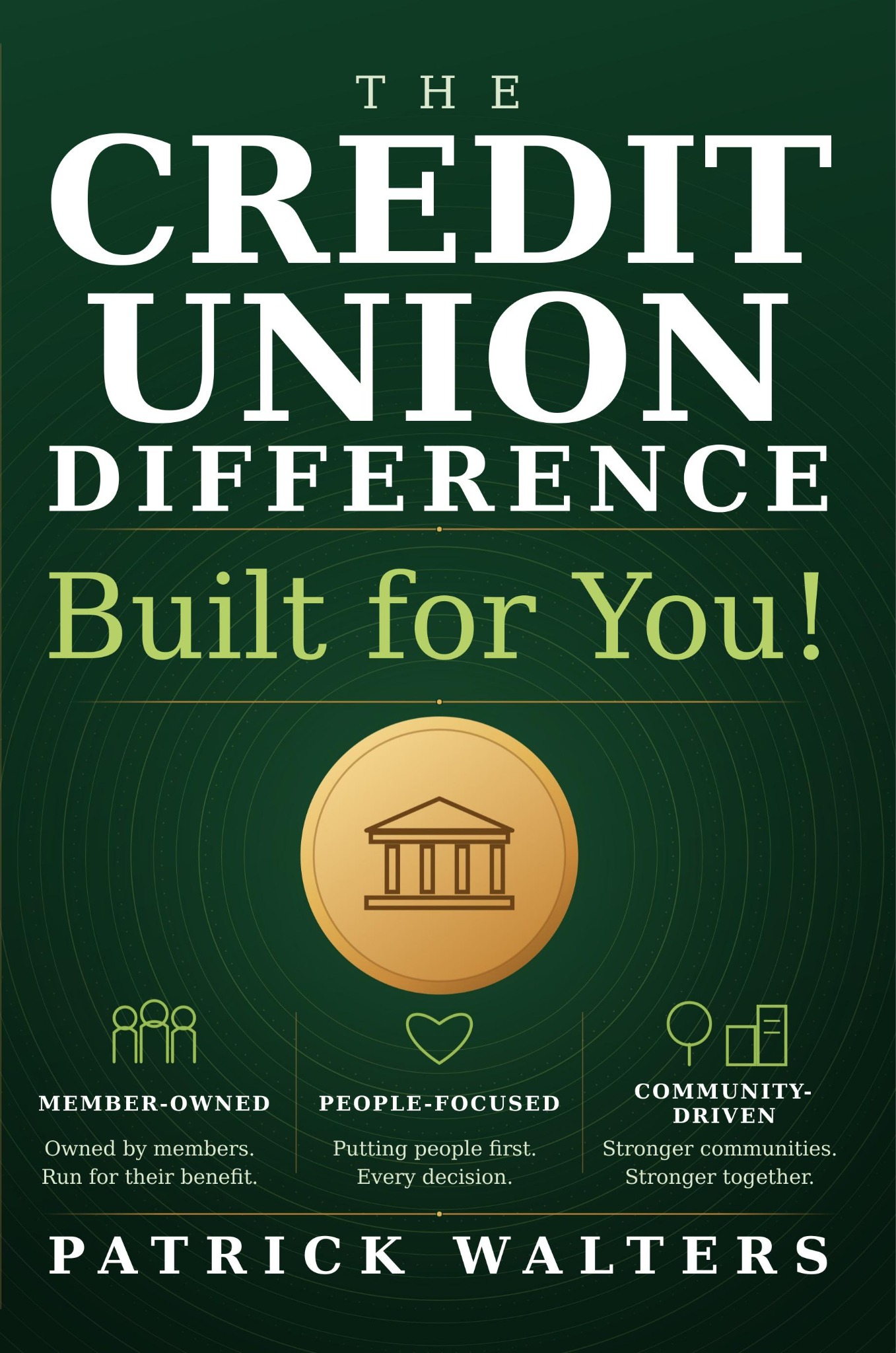
The Credit Union Difference™
Discover why more than 140 million Americans have chosen a different kind of financial institution—one built to serve people instead of shareholders. In The Credit Union Difference: Built for You!, Patrick Walters reveals the remarkable story behind the credit union movement and explains why its cooperative model may be more important today than ever before. It’s a new way to think about money, ownership, and what financial institutions should be.
Request a Bulk Order
Inside You’ll Discover:
- Why credit unions matter now more than ever
- The powerful difference between member ownership and shareholder profit
- How cooperative finance strengthens individuals and communities
- The remarkable history—and exciting future—of the credit union movement
- Why millions of Americans still don’t know about one of the best financial choices available
Perfect For:
- Current and prospective credit union members
- Credit union employees and volunteers
- Board members and executives
- Anyone who believes financial institutions should serve people—not the other way around
Whether you’re a lifelong credit union advocate or discovering them for the first time, this book will forever change the way you think about banking.
“Built for You!” is more than a subtitle—it is the promise at the heart of every credit union.
Frequently asked questions
What's the difference between the book and the Board Academy?
The book makes the case for why credit unions matter — the cooperative ownership structure, the seven cooperative principles, and the real financial and trust benefits members receive. The Board Academy is a separate six-module training curriculum that takes that foundation and turns it into practical governance skills for directors: how to spot mission drift, how to evaluate pricing decisions, and how to ask the right questions in the boardroom.
What is the '$38 billion' figure the book cites?
It’s NCUA-reported data: for the year ending December 2024, credit unions delivered approximately $38 billion in financial benefits to their members nationwide through better rates, lower fees, and dividends — a return several times larger than the $2.8 billion annual cost of the federal credit union tax exemption that makes the model possible.
Does the book just make the case for credit unions, or does it hold them accountable too?
Both, deliberately. Alongside the historical and financial case for the cooperative model, the book examines real governance failures at credit unions — including a CFPB enforcement action over improper overdraft fees and a DOJ redlining settlement — to make the point that keeping the cooperative legal structure isn’t the same as keeping cooperative practice. That’s the argument for why board oversight, not just ownership on paper, is what actually protects members.
Is the book required before starting the Board Academy?
No, but it’s recommended as the foundation. The Board Academy assumes you understand the “why” — including the seven cooperative principles the book lays out — and focuses on the practical “how” of governance.